Commentary: Despite having the playbook, LA still failed to command the 2025 fires
Published in Op Eds
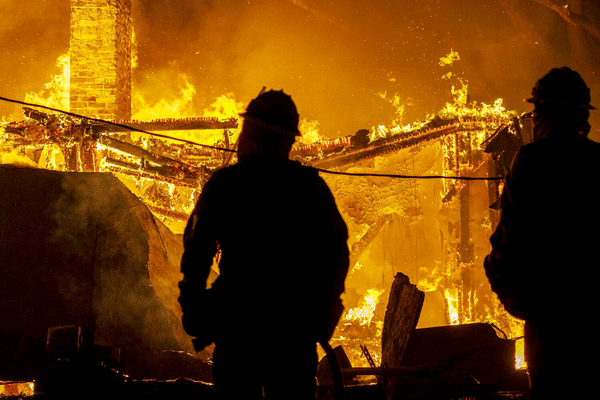
On Jan. 7, 2025, leaders from the Los Angeles County Fire Department, L.A. County Sheriff’s Department and Pasadena Police and Fire departments worked tirelessly from separate trailers in the Rose Bowl parking lots as they managed the Eaton fire response.
The county’s incident commander didn’t even learn the fire had swept through west Altadena until daybreak. By then, the flames had already moved through much of the neighborhood.
In the Palisades, local and county fire and police departments declared that they’d work under a unified command to fight the blaze but still operated independently. The command post moved four times, falling further behind with every relocation. Dispatchers created evacuation zone boundaries on paper maps using street names spoken over the radio. Some residents got their evacuation alerts 90 minutes after their homes had already started to burn.
These findings come from the UL Research Institute’s “Southern California Fires Incident Analysis Report,” a long-awaited independent analysis commissioned by Gov. Gavin Newsom and released on Oct. 2. The Eaton and Palisades fires burned simultaneously over many days, ultimately killing 31 people and destroying more than 16,000 structures.
The firefighters fought flames driven by gusts near 100 mph, with aircraft grounded for hours and hydrants in the hills running dry. Police and fire dispatchers faced an overwhelming wave of emergency calls, forcing them to temporarily route 911 through a single police captain’s personal cellphone. These first responders did heroic work in brutal conditions, so the failure was not on the fire line. It was systemic.
While the wind explains why the fires moved so quickly, it does not explain why the command came apart.
In my 25 years reading after-action reports, one aspect of human behavior stands out in nearly all of them: a widespread, collective complacency. No after-action report documents that dynamic as thoroughly as this one.
LAFD had procedures for high-danger days but ignored them, recalling off-duty firefighters back to work only after the Palisades fire had already started. Its leadership told investigators that, prior to the day of the fires, they believed they were adequately prepared.
The complacent are confident. They handle some level of emergency every day and assume they will figure everything out when the time comes.
As with every catastrophe, this one has its stories of vigilance. The vigilant are professional worriers. They activate early and proactively convene massive response teams, because they know that when the catastrophe comes, they must be prepared to do everything all at once.
In Los Angeles, the county’s Office of Emergency Management watched the forecast for days and opened its emergency operations center before the first spark. The county fire department added staff the day before the fires and held over the outgoing shift.
Unfortunately, their efforts were not nearly enough. In Eaton, though the county activated early it still could not hold its command together. Mobilizing means little without a leadership team that has practiced working together at the speed and scale that day demanded.
We’ve been here before. A wildfire siege in the late summer of 1970 killed 16 people and destroyed some 700 structures in San Diego, Los Angeles and Ventura counties. From that disaster came Firescope, a partnership that created the Incident Command System — a common command structure that brings multiple agencies together under one plan. ICS remains the backbone of American emergency response.
The Southern California Fires Incident Analysis Report also looks back across decades of California wildfire after-action reports dating to 1953. The same problems recur: disunified command, agencies working at cross-purposes, coordination failures and lessons identified but not institutionalized.
We do not have a lesson-learned problem. We have a lesson-not-implemented problem.
Replace the city’s name on the new report’s cover, and it would still read true. Every large American metro area should ask whether its own agencies would do better. Few would. New York imposed a citywide incident management system in 2004 because its police and fire departments refused to share command on their own.
The playbook is not the problem. We have had it for more than 50 years. What is missing is the habit of rapidly scaling up a multiagency response team, trust between agencies built before the fire and command teams that regularly practice the worst-case scenario together.
State law already ties reimbursement of local response costs to use of California’s Standardized Emergency Management System, and agencies certify their own compliance. Before Newsom leaves office in January, he should direct the Office of Emergency Services to begin creating new rules that make qualified command, proactive activation and large-scale joint exercises conditions of that money, verified by the state. His successor must finish the job, with fierce accountability for every recommendation.
Firescope carried us into the age of incident command. Let these fires carry us into the age of catastrophe management — an era of cascading crises in which fires burn simultaneously while power, water, communications and transportation systems fail around them.
Seven decades of after-action reports are enough. We know what fails and we know how to fix it. What remains is the vigilance and will to do it.
____
Kelly McKinney is the vice president of Emergency Management and Enterprise Resilience at NYU Langone Health in New York City and the former deputy commissioner at the New York City Office of Emergency Management.
_____
©2026 Los Angeles Times. Visit at latimes.com. Distributed by Tribune Content Agency, LLC.















































Comments