George Skelton: CEQA needs reform, but not like this
Published in Op Eds
SACRAMENTO, Calif. — When does positive reform become negative regression? That’s what Californians need to answer before voting on Proposition 45, which would substantially change the state’s landmark environmental protection law.
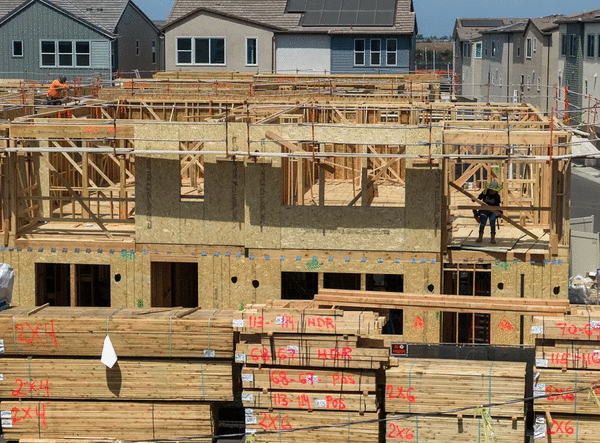
The business-backed ballot measure would make it much easier and less costly to build loads of projects — not just housing, but also water works, clean energy and transportation facilities.
It also, however, would give citizens much less time and fewer tools to assess and oppose projects they deem unfit for their area — like freeway expansions or giant warehouses.
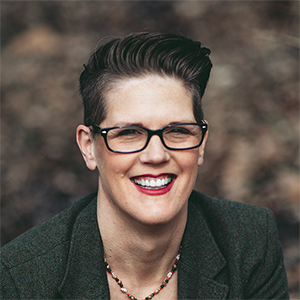
“It tips the scale from favoring the public and the environment to favoring developers and polluting projects,” asserts state Sen. Catherine Blakespear (D-Encinitas), chair of the Senate Environmental Quality Committee.
“It’s an overreach.”
“We streamline the building process for billionaires to erect stadiums. Why don’t we do it for middle-class homebuyers?” declares Dan Dunmoyer, president and chief executive of the California Building Industry Assn., a major backer of Proposition 45.
It’s a bitter, high-stakes fight that’s too close to call. Polling has indicated the outcome could be decided in the final days before the Nov. 3 election.
Proposition 45 would be the most significant overhaul of the California Environmental Quality Act since Republican Gov. Ronald Reagan signed it in 1970.
CEQA — as it’s commonly called and used as a four-letter obscenity by developers — is justifiably credited with keeping California air less polluted, water relatively clean, urban traffic from being worse and more outdoors open to the public.
It requires developers — private and public — to undergo a lengthy process of analyzing a project’s environmental effects and reducing their negative impacts.
But over the years CEQA became blatantly abused.
Union blackmailers — ”greenmailers” — threatened frivolous CEQA lawsuits unless developers caved to labor demands. Business rivals drove off potential competitors by filing protracted suits that wore down investors. NIMBYs — ”not in my backyard” — fought local projects that crowded their spaces or blocked views.
As a CEQA battle dragged on, the developers’ costs soared and many cut their losses by abandoning the project. Home building plummeted in California and the law of supply and demand ruled. Housing costs skyrocketed.
Project opponents legitimately concerned about environmental impacts also filed lawsuits, but they weren’t the developer’s big problem — not like the CEQA abusers.
Finally, prodded by Gov. Gavin Newsom, lawmakers have been responding in recent years to the developers’ frustration. They’ve been pecking away at CEQA with meaningful reforms for most types of housing, especially urban apartment projects near transit hubs.
“You’ve got to just move things,” Newsom exclaimed at an economic summit in Long Beach last week. “I’m just done with the [CEQA] litigation…. Years and years of B.S…. Eight years to develop something? Give me a break.”
But the nearly termed-out governor still hadn’t taken a position on Proposition 45.
Money and power, of course, have always had their privileges in the state Capitol. Billionaire sports team owners have had no trouble securing CEQA exemptions for construction of new stadiums or arenas. The exemptions are handed out like free bobbleheads.
In fact, Newsom recently signed legislation essentially granting a CEQA exemption in San Diego for a 16,000-seat sports arena and housing project led by Los Angeles Rams owner Stan Kroenke.
Dunmoyer says that lawmakers “have done quite a bit” to expedite housing, “although not quite enough. It has been limited in scope and size — limited to urban infill and close to transit. It doesn’t address the overwhelming amount of housing needs in California.
“It doesn’t help the first-time middle-class homebuyers or address market rate rentals.”
He pegs the cost of a CEQA battle at $75,000 per new home, noting that’s added to the selling price — if the dwelling ever gets built.
Opponents of Proposition 45 argue that the measure’s backers wish to return California home building to 1960s sprawl when the state’s population was half its current size and there was more usable open space to pave over with roads and subdivisions — more orchards to rip up and wetlands to drain. And that led to longer smog-spewing car commutes to city jobs.
“Sprawl housing is not affordable housing,” Blakespear says. “There are costs to build new infrastructure like utility lines and water facilities, and high insurance costs. Then taxpayers have to clean up the pollution.
“Do we really want new sprawl housing developments in wildfire areas? We need to incentivize [urban] infill housing, instead of in the middle of the forest or the desert.”
Proposition 45 — generated by the state Chamber of Commerce— would streamline the CEQA approval process for several types of construction projects the measure deems “essential.” They include housing, water systems, clean energy, health facilities, jails, fire stations, wildfire reduction, broadband access and transportation.
Two very controversial projects were excluded — the bullet train and delta tunnel — and so was nuclear power.
Opponents insist that the proposition eases the way for construction of massive data centers. But backers adamantly deny it, and they make sense. The anti-45 campaign is trying to scare voters with a Halloween bogeyman.
But there’s plenty of other ugly and smelly potential projects that could benefit.
If this were solely about housing, it wouldn’t ring so many alarms.
Here’s how I see it: We elect a governor and Legislature to handle such complex issues. Let them — especially the new governor, presumably Xavier Becerra — consider enacting new CEQA reforms, holding months of public hearings and ultimately compromising on a deal.
OK, maybe that’s dreaming. But it beats voters trying to wrap their heads around this in a few days.
Unlike regular legislation, if the ballot measure did pass and flaws emerged, it would be very hard for lawmakers to amend, requiring a two-thirds vote.
Proposition 45 rolls back CEQA protections too far — especially with a dangerous anti-environment California abuser in the Oval Office.
©2026 Los Angeles Times. Visit at latimes.com. Distributed by Tribune Content Agency, LLC.































Comments