E-bikes are all over mountain trails. Some want them banned
Published in Lifestyles
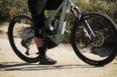
LOS ANGELES -- In bright sunshine, with the Pacific Ocean sparkling far below, two middle-aged men hopped on mountain bikes and started climbing a steep dirt road above Zuma Beach in Malibu. They pedaled up more than 2,000 vertical feet, chatting comfortably about marriage, careers and early retirement.
They did not discuss the fact that, until recently, a climb like this would have reduced them both to gasping wrecks. Or that their brisk pace would only have been possible for world-class athletes.
Their secret? Tiny electric motors tucked between the pedals that quietly quadrupled their leg power.
Across California, electric bikes are proliferating at an astonishing rate as overwhelmed public officials struggle to rewrite the rules of the road.
Nowhere is the tension more obvious than in once-tranquil parks and on remote mountain trails, where people go to escape the maddening march of technology.
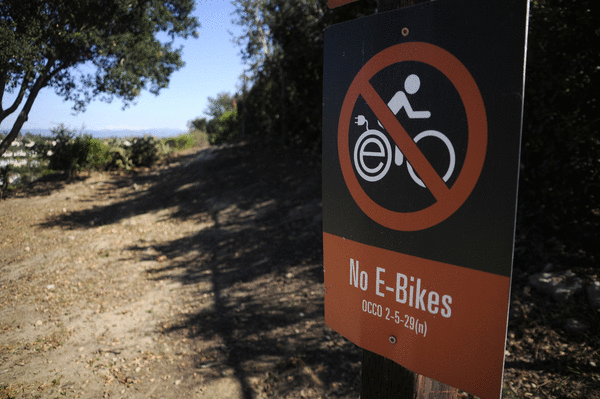
The intrusion of e-bikes, with their faint but unmistakable electric whine, is sparking a fierce backlash from traditional trail users and forcing land managers into a confusing new debate over safety and fairness.
To many longtime riders, the whole thing feels like sacrilege.
Traditional mountain bikers are among the most hardcore of adventure athletes. Surfers and skiers land in water or snow when they wipe out; a mountain biker who loses control flying down a steep trail risks going head first into a tree or skidding across sharp, unforgiving rocks.
And going downhill is the fun part. The long, slow, excruciating climbs are what make so many quit the sport.
Which is why traditionalists get a little salty when lesser athletes on e-bikes blow past them ascending steep slopes — sometimes expending so little effort they could have a hot dog in one hand and a beer in the other.
E-bikers are “soft, weak humans” who “disgrace the sport,” according to one recent post on a Facebook page devoted to mountain biking. Others have called for banning any bike with a motor from dirt trails altogether.
Suddenly, these fearless and intimidating souls who spent decades fighting for their right to ride on public land — regardless of what anyone else wanted — sound like so many gate-keeping trail Karens.
They’re not alone. Federal, state and local land regulators are struggling to keep up with the rapidly changing technology while managing the conflicts it creates.
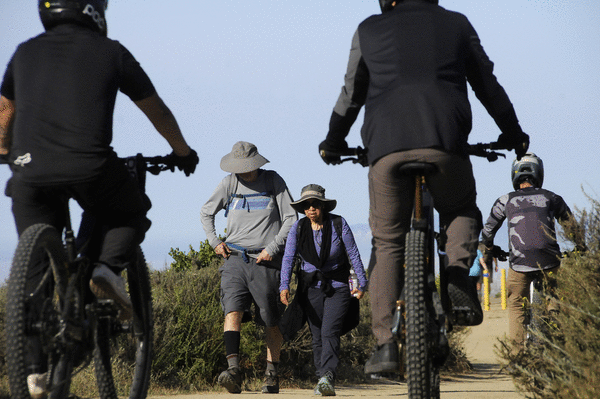
Traditional mountain bikers resent e-bikers. Hikers, who already worry about bikes flying down narrow trails, now have to worry about e-bikes flying up from behind. People on horseback, or those out for a quiet stroll with their dogs, wish everyone on wheels would just stay home.
Meanwhile, the bikes themselves are changing faster than the rules that govern them.
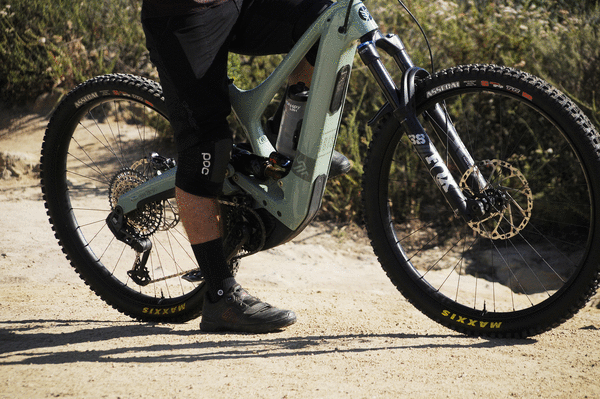
Early e-mountain bike designs offer relatively modest “pedal assist,” boosting a rider’s effort until they reach about 20 miles per hour — more than enough power on narrow dirt trails.
Newer designs push speeds closer to 30 mph, enabling riders to keep pace with city traffic. Others have throttles and require no pedaling at all — they’re essentially electric motorcycles capable of hitting 60 mph.
The result is a baffling spectrum of machines so hard to tell apart that some public land regulators are drawing an equally hard line.
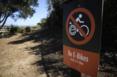
Rancho Palos Verdes allows traditional, “analog” bikes on its extensive trail network within a nature preserve overlooking the Pacific Ocean, but prohibits e-bikes entirely. In Los Angeles, city officials are considering an e-bike ban on all equestrian, hiking and recreational trails while allowing them on dedicated bike paths.
State parks are trying to find the middle ground with a more fragmented approach, allowing pedal-assisted e-bikes that provide a boost up to 20 mph almost everywhere in Chino Hills, for example, but restricting them to just a handful of trails at Crystal Cove.
The goal is to “proceed cautiously, with resource protection and visitor safety being paramount,” said Adrien Contreras, assistant deputy director of parks for the state of California. Officials want to let people enjoy themselves, but not at the expense of turning quiet trails into “full throttle” freeways.
Consistent enforcement is tricky, however.
“You never have enough staff to monitor every bit of the trails,” Contreras said.
Contreras understands both sides of the debate. He grew up riding BMX bikes and still likes to hop on an old-fashioned bike when he wants some exercise. But about a year ago, he bought an e-bike “that I love dearly,” he confessed.
He rides it on paved trails near his home in Sacramento.
“It’s great when you’re just trying to get somewhere and you don’t want to show up all sweaty,” he said. “And I absolutely understand if all you want to do is get out and explore — what a wonderful way to experience the parks.”
But he walks his dogs on the same paths he rides, and he worries about getting run over by groups of kids who “absolutely bomb down the trail” on powerful e-bikes.
“So it’s something I experience in my day-to-day life,” he said. “Something that I’m always navigating.”
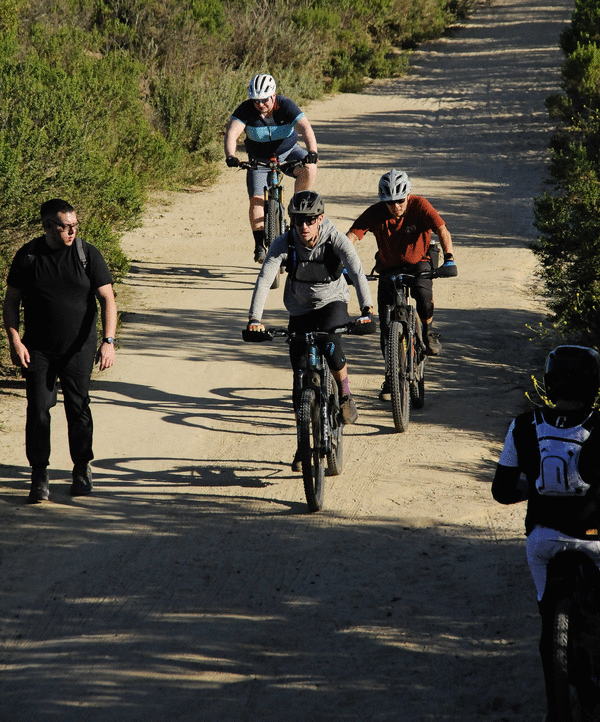
Craig Lester, founder of Malibu Mountain Bikers, leads e-bike tours in the Southern California hills. Like so many others, he used to consider electric motors “cheating” — until his son turned 13 and he could no longer keep up.
“I didn’t really have an option other than to go get an e-bike,” Lester said.
He ticked through the familiar arguments in the new technology’s favor: E-bikes make the sport accessible regardless of age, injury or fitness. They encourage people to ride farther, faster and more often. And they benefit the environment if people use them for errands instead of hopping into gas-guzzling cars.
But the real appeal is simpler than all of that — they’re just so much fun.
In less than three hours, we covered nearly 14 miles and climbed almost 3,300 feet, with plenty of stops to chat and admire the scenery. We never broke more than a mild sweat.
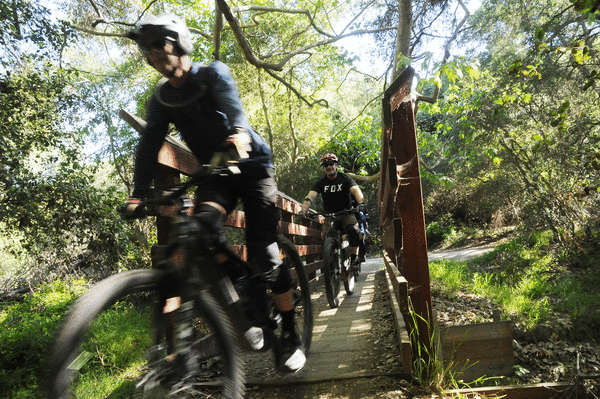
Most of our mileage was on fire roads, but we also rode narrow trails, rolling over boulders and logs with the help of the wide tires, plush suspension and, of course, electric motors.
In places, the terrain was so steep and loose that it would have been hard to climb on foot, and hopeless on a regular bike. With the motor, one enhanced pedal stroke was all it took to realize that going up would be every bit as easy and addictive as coming down.
It felt like a superpower — like you had stolen something from the universe.
For Lester, the biggest challenge isn’t the terrain. It’s the maddening patchwork of regulations.
“In one ride, you might cross six or seven jurisdictions, and they all have different rules on e-bikes,” he said.
He tries to stick to federal land because it’s usually the simplest, he said. Managers typically allow low-power, pedal assist e-bikes wherever analog bikes are permitted.
E-bikes are becoming so common that he doesn’t worry about raised eyebrows from other trail users anymore. Almost everyone is friendly if you slow down and say hi, he said.
“And if you’re really exceeding the limits and flying around blind corners, they have a right to yell at you,” he said.
If only regulators were so easy to charm. Under pressure to ensure safety above all else, Lester worries they’ll decide it’s easier to ban everything than to sort through the nuances.
“All it would take is one serious injury,” he said. “One really bad case could ruin this for everyone.”
____
Times staff writer Sandra McDonald contributed to this report.
©2026 Los Angeles Times. Visit at latimes.com. Distributed by Tribune Content Agency, LLC.




















Comments