Going barefoot in a home with incontinent pets; ick but important
Published in Cats & Dogs News
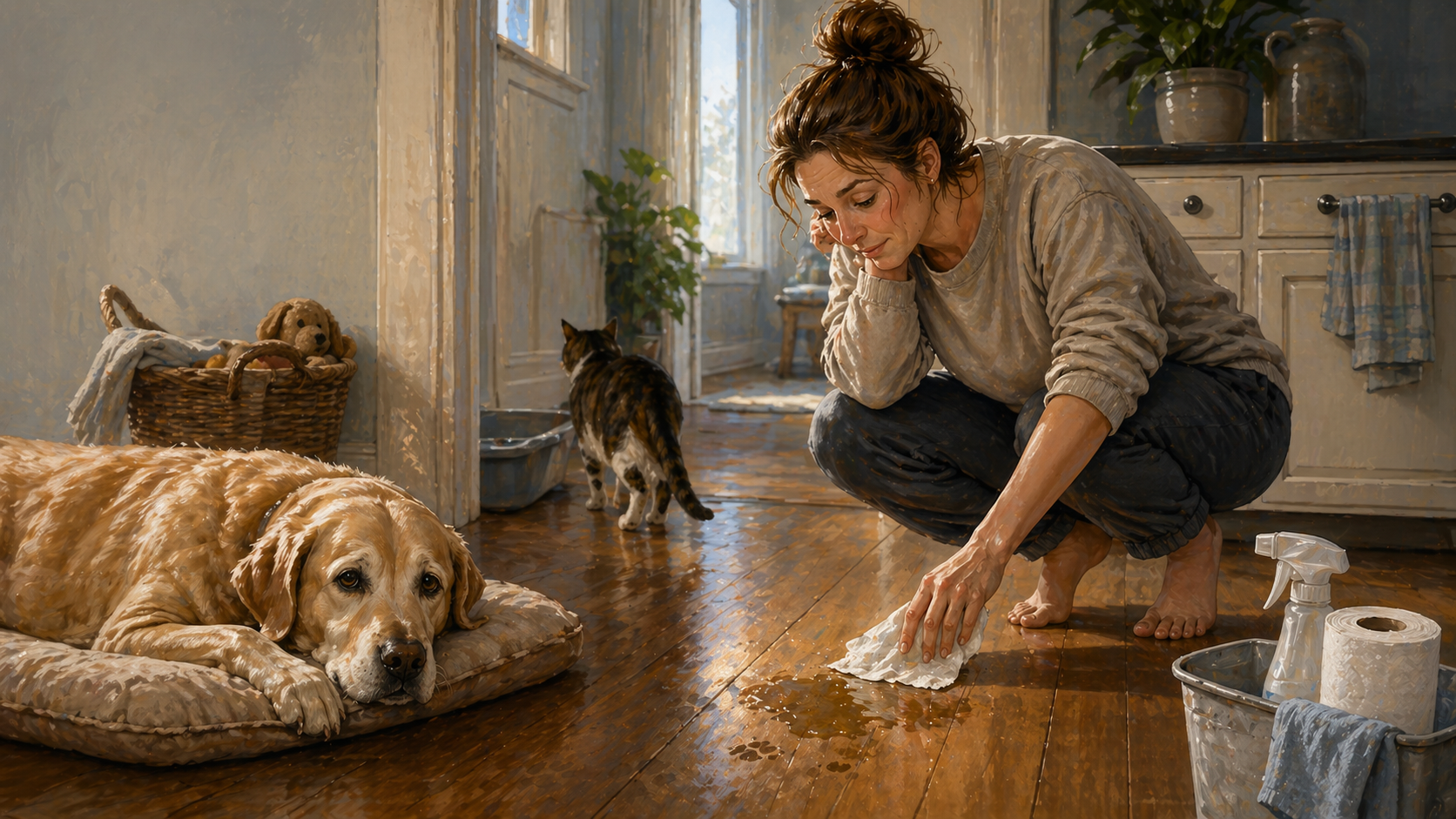
There are some household realities that never make it into the glossy home magazines. One of them is this: if you live with elderly pets, rescue animals, puppies, medically fragile animals, or simply a very full house of dogs and cats, eventually someone is going to miss the litter box, leak on the floor, or leave a surprise in the hallway at 2 a.m.
And if you also happen to be a barefoot-at-home person, you are going to find out about it the hard way.
Most pet owners know the sensation instantly. The cold patch on hardwood. The suspicious dampness on tile. The panicked glance downward. The sprint toward the sink while muttering words unsuitable for polite company.
It is objectively disgusting. It is also one of the most practical reasons many longtime pet owners become surprisingly disciplined about cleaning routines, floor awareness, and home hygiene.
Because beneath the “ick” factor is something more meaningful: the complicated, often deeply loving relationship between humans, animals, aging, and the realities of shared domestic life.
The Reality of Aging Pets
People love talking about puppies and kittens. Much fewer want to discuss what happens fifteen years later.
Older dogs can lose bladder control. Cats with kidney disease may urinate outside the litter box. Arthritic animals sometimes cannot physically reach their normal bathroom area in time. Rescue animals with trauma histories may have lifelong accidents under stress.
Veterinarians say these problems are extraordinarily common, especially as pets live longer than ever before.
In practice, this means many households quietly adapt in ways outsiders rarely see. Rugs disappear. Mop buckets become permanent fixtures. Enzyme cleaners occupy honored positions beneath sinks. Certain rooms become “safe zones” with easily washable flooring.
And many pet owners — particularly those who prefer going barefoot at home — develop an almost supernatural awareness of floor texture and temperature.
You learn to read a room with your feet.
Tile slightly sticky? Investigate immediately. Hardwood oddly cool? Pause before stepping fully. One sock suddenly darker than the other? God help you.
None of this is glamorous. But it is domestic life in its least filtered form.
Why Barefoot People Notice More
Ironically, people who go barefoot at home often become more attentive cleaners than people who remain shod.
Shoes create distance. Bare feet create accountability.
You notice crumbs immediately. You feel grit before it accumulates. You discover moisture fast — sometimes tragically fast. The floor becomes less of an abstract surface and more of an actively monitored part of the home environment.
Several cleaning experts interviewed for this story noted that households where people regularly remove shoes indoors often maintain cleaner floors overall, even if the residents themselves joke constantly about stepping in cat vomit.
There is also a psychological component. Bare feet make a home feel inhabited in a tactile way. People become more conscious of comfort, texture, and sanitation because they are physically interacting with the environment rather than insulating themselves from it.
Of course, there is a downside: you are also the first line of biological detection.
As one Virginia dog owner put it bluntly, “The floor tells you everything eventually.”
The Emotional Side Nobody Mentions
What makes this subject strangely emotional is that many accidents happen during the final years of an animal’s life.
The old Labrador who cannot quite make it outside anymore. The beloved cat with failing kidneys. The tiny senior dog who still proudly trots to the door despite having almost no bladder control left.
Pet owners often describe a subtle emotional shift during this stage. Cleaning up after an elderly animal stops feeling like a nuisance and starts feeling like caretaking.
There is frustration, certainly. There are middle-of-the-night sighs. There are ruined rugs and steam-cleaner purchases and moments of exhausted despair.
But there is also tenderness.
The same dog who had accidents on the kitchen floor may have spent fifteen years sleeping beside the couch during bad days. The cat who missed the litter box may have curled against someone’s chest through grief, illness, divorce, loneliness, or depression.
Domestic life with animals is not hygienic perfection. It is mutual dependence.
Sometimes that dependence smells terrible.
The Barefoot Calculation
For committed barefoot-at-home people, there is often a practical calculation involved.
Many argue bare feet are easier to clean than slippers or socks contaminated by invisible messes. A quick wash at the sink solves the problem immediately. Fabric footwear, by contrast, can spread contamination room to room before anyone notices.
Others say going barefoot simply makes them more alert.
One cat owner described it this way: “When you wear shoes indoors, you stop paying attention. Barefoot, you know instantly if something’s wrong.”
Not everyone agrees, of course. Plenty of people respond to pet-related accidents by becoming aggressively pro-slipper. The appeal is understandable.
Still, among dedicated pet owners, there is a recurring attitude that the occasional unpleasant surprise is simply part of the contract.
You adopt the animal. You accept the mess.
Eventually, if you are lucky, you even accept the indignity with a certain amount of humor.
Cleaning as Compassion
Modern pet culture often emphasizes devotion through treats, toys, birthday cakes, and Instagram photos. But longtime owners say the real measure of attachment may be less glamorous.
It is patience.
It is cleaning the floor again without yelling at the old dog who cannot help it anymore. It is buying waterproof mattress covers for a senior cat. It is carrying paper towels down the hallway at dawn while half awake.
And yes, sometimes it is stepping into something horrifying with your bare foot and deciding not to be angry because the animal responsible is old, confused, or sick.
That does not make the experience less revolting.
It simply makes it human.
========
Maris Bellamy is a features writer focusing on domestic life, pets, and the quiet realities of modern households. She writes frequently about the intersection of comfort, caregiving, and the small rituals people develop around home. This article was written, in part, utilizing AI tools.







Comments