Dealing with pet hair and other 'accidents' on your clothing
Published in Fashion Daily News
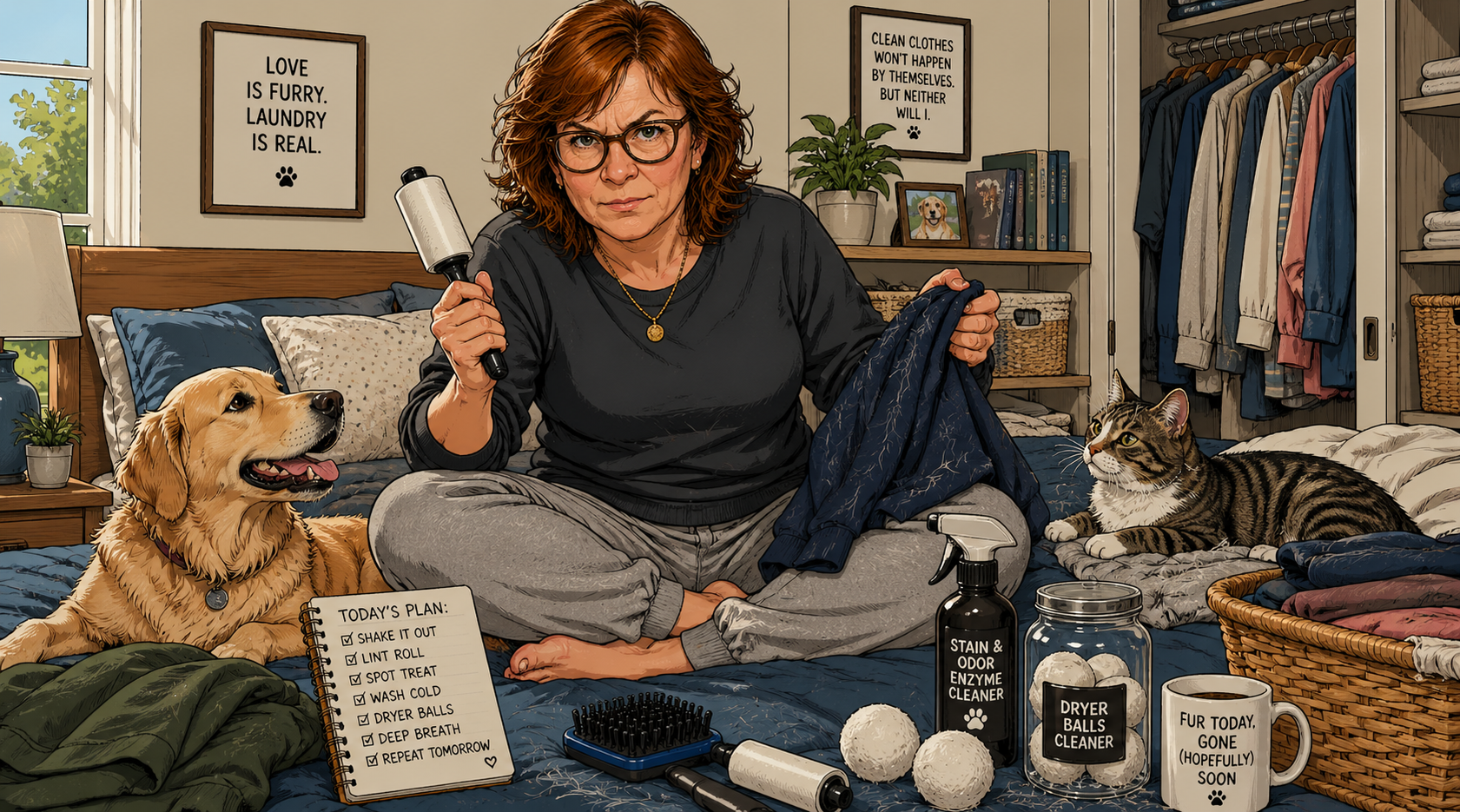
Anyone who shares a home with pets eventually accepts a simple truth: fur travels. It clings to sweaters, settles into car seats, appears mysteriously on freshly washed laundry and somehow survives even the most determined lint roller attack. Alongside the hair comes the occasional muddy paw print, surprise slobber streak, scattered litter dust or the dreaded “I sat where the cat was five minutes ago” discovery.
For devoted pet owners, these inconveniences are usually a small price to pay. But maintaining clothes in a pet-friendly home often requires a few practical strategies — especially for people trying to keep work attire, dark fabrics or delicate garments looking presentable.
Fortunately, most pet-related clothing disasters are manageable with the right habits, tools and expectations.
Why pet hair seems impossible to escape
Pet hair has an uncanny ability to weave itself into fabrics. Static electricity, textured materials and synthetic fibers all contribute to the problem, especially during seasonal shedding periods.
Certain fabrics act almost like magnets. Fleece, wool, corduroy and knitwear tend to trap fur deeply, while smoother materials such as denim, silk blends and tightly woven cotton release it more easily.
Experts say one of the biggest mistakes pet owners make is waiting too long to address hair buildup. Once fur works its way into fabric fibers — especially during washing and drying — removal becomes far more difficult.
That is why many professional cleaners recommend quick daily maintenance instead of occasional deep cleaning marathons.
The humble lint roller still earns its place
Despite endless gadget innovations, the classic lint roller remains one of the simplest and most effective tools for removing loose fur from clothing.
Many pet owners now keep rollers in multiple locations: near the front door, inside vehicles, at office desks and beside laundry areas. Quick touch-ups before leaving the house often prevent fur from becoming embedded throughout the day.
For heavier shedding seasons, reusable alternatives have also become popular. Silicone brushes, velvet-style directional tools and rubber grooming gloves can often remove large amounts of hair without creating piles of disposable sticky sheets.
Some pet owners swear by lightly dampened rubber dish gloves, which create friction that lifts fur from fabric surprisingly well.
Still, lint rollers work best as maintenance tools rather than miracle solutions. If clothing is already heavily coated after a wash cycle, more aggressive cleaning may be necessary.
Laundry habits matter more than people realize
One of the easiest ways to reduce pet hair on clothing starts before the washing machine even turns on.
Shaking clothes outdoors before washing helps loosen surface fur. Some homeowners also run especially hairy laundry through a short dryer cycle first, using no heat and a clean lint trap. The tumbling action removes loose hair before water has a chance to bind it deeper into fabrics.
Cleaning the washing machine itself is equally important. Hair trapped in drums, seals and filters can simply redistribute itself onto the next load.
Dryer sheets and wool dryer balls may help reduce static cling, which is often responsible for fur stubbornly attaching itself to clothing after drying.
Laundry experts also recommend avoiding overstuffed machines. Clothes need room to move freely if hair is going to separate effectively during washing.
And while it may seem obvious, separating heavily pet-covered items from cleaner garments can dramatically reduce cross-contamination.
When accidents go beyond pet hair
Pet ownership occasionally means dealing with more than fur. Muddy paws, drool, urine accidents, hairballs and litter residue are all part of the reality for many households.
The good news is that speed matters more than panic.
For mud and dirt, experts recommend letting the mess dry completely before brushing away excess debris. Attempting to wipe wet mud often spreads stains deeper into fabric fibers.
Urine accidents should be rinsed quickly with cool water before washing. Hot water can set odors permanently. Enzyme-based cleaners designed specifically for pet stains are often more effective than ordinary detergents because they break down odor-causing proteins rather than merely masking them.
For greasy drool or oily stains, a small amount of dish soap applied directly to the affected area before washing can help lift residue.
Meanwhile, lint brushes and handheld vacuums have become increasingly common near entryways, particularly in homes with large dogs prone to bringing the outdoors inside.
Choosing pet-friendly clothing can help
Some longtime pet owners quietly adapt their wardrobes around their animals.
Dark black pants, for example, may look stylish but instantly showcase pale fur. Many people gradually shift toward heathered fabrics, earth tones or textured materials that camouflage shedding more effectively.
Tightly woven fabrics also tend to resist hair buildup better than fuzzy or static-prone materials.
Certain “pet-friendly” performance fabrics have become increasingly popular in recent years, especially for people who work remotely or spend long hours with animals at home. These fabrics are often smoother, easier to brush clean and more resistant to odor absorption.
Of course, many pet lovers simply accept that complete perfection is unrealistic.
There is a reason so many owners perform the familiar “shirt inspection” before leaving the house, quickly brushing away visible fur moments before walking out the door.
The emotional side of living with pet messes
For many people, pet hair becomes less an annoyance and more a strange symbol of home life itself.
Owners often joke that no outfit is truly complete without at least one stray cat hair or dog hair attached somewhere. Over time, the messes become intertwined with routines, affection and familiarity.
The blanket covered in fur is also the blanket where the dog naps every evening. The sweater with rabbit hair on the sleeve is the one worn during quiet mornings on the couch.
Professional organizers and cleaning experts increasingly encourage pet owners to focus less on absolute perfection and more on systems that make cleanup manageable. Small daily habits — regular vacuuming, accessible lint tools, washable fabrics and quick response to stains — usually matter far more than obsessive cleaning.
Because in most pet-friendly homes, the goal is not to eliminate every trace of animals. It is to create a space where both humans and pets can comfortably coexist.
Even if that occasionally means showing up to work with one stubborn golden retriever hair still clinging to your sleeve.
========
Corinne Vale is a lifestyle and home-care writer who focuses on practical living, domestic routines and the realities of sharing spaces with animals. She writes frequently about cleaning habits, comfort and everyday household challenges.
This article was written, in part, utilizing AI tools.



Comments