Gen Zers, just because you can buy a home, should you?
Published in Home and Consumer News
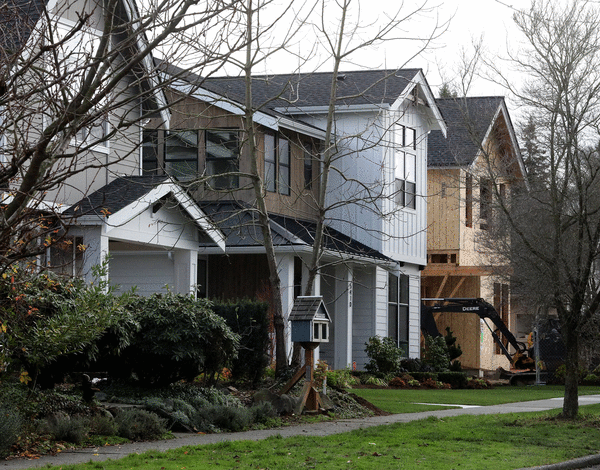
Just because you can buy a home, should you?
It seems like a no-brainer when home prices soar year after year. But experts say first-time homebuyers need to consider factors beyond pure capital before jumping into the market.
The median age of a first-time homebuyer has reached a record high of 40 — a time when most people are settled. But every once in a while, young people find themselves able to purchase a home, be it through a high-paying job, inheritance or family money.
Although buying a home young can be a good long-term investment, it can also be a financial burden if the time isn’t right, economists say.
Job hopping and moving is common for people in their 20s. Gen Z’s average tenure in the first five years of their career is just over one year, while millennials typically spend 1.8 years at a job before switching, according to a recent survey from the HR firm Randstad.
That’s fine if the area they live in has plenty of jobs in their industry. But if the only home they could afford to buy was outside of a major job market, that could be an issue — or may at least keep them at the same job for longer.
Economists say it typically takes five years of owning a home to build up enough equity to offset the costs of buying and selling. If a homeowner sells before that mark, they risk taking a loss on their home.
“It’s really important to have some confidence that you’re going to be there five years, ideally seven years, if you’re going to buy a house,” said Windermere principal economist Jeff Tucker. “It is hard for someone in their 20s to know that they’ll want to do that. … People have trouble sorting it out even at 40.”
Selling a house typically requires 10% to 15% of the sale price, which goes toward real estate agent commissions, transfer taxes, legal fees and other closing costs, according to Zillow.
Plus, the early years of homeownership are mostly spent paying the bank for the privilege of borrowing money rather than paying off the actual house.
Let’s say someone has a $600,000 loan with the most recent average mortgage interest rate of 6.23%. After the first three years of owning a house, they will have paid $110,156 toward interest and just $22,558 toward principal (the initial amount of the loan).
If someone needed to move, they could rent out their home. But that’s difficult in areas like Seattle, where home costs have risen faster than rents. Median mortgage payments on homes bought today are almost twice the average rents in King County.
“It’s a region where the rental value of a home does not cover the carrying costs of a home,” Tucker said. “And a lot of people don’t want the risk and challenges of being an accidental landlord.”
Experts also warn of people overextending themselves just to break into the market earlier.
First-time homebuyer programs allow people to buy homes with small down payments. But that means higher monthly payments, increasing the likelihood that someone becomes burdened by their home costs.
“If they’re really stretching, if they are putting 3.5% down, that without a doubt will be a problem,” said Matthew Gardner, a Seattle-based real estate economist.
For some living in an area like Seattle, where young workers in the tech industry can earn sizable salaries right out of school, high monthly mortgage payments may not be an issue. But still, buyers should not bite off more than they can chew.
“The last thing I want to see are new homeowner households worried about their payments every month. If that’s where you are, it’s not your time yet,” Gardner said.
If someone doesn’t feel ready for homeownership, there are other ways to invest money in the meantime, such as 401(k)s, stocks and bonds, Tucker said.
“It's not the end of the world to stay out of the homeownership party for a few years,” Tucker said. “There are plenty of sensible and financially prudent ways to save for the future.”
©2025 The Seattle Times. Visit seattletimes.com. Distributed by Tribune Content Agency, LLC.







Comments