
Ask the Builder: Faulty plumbing can cost you
I’m receiving very positive feedback from the past columns that chronicle my daughter’s search for a home of her own. This column may help you diagnose chronic plumbing problems in your own home that you’ve come to live with, not knowing that there was something wrong.
Forty years ago, I used to do home inspections for buyers. This was several years before it was an industry. A few other builders in Cincinnati did these inspections too. They were my friendly competitors. The top real estate agents at the time asked for our expertise to help point out defects in existing homes for sale.
It’s important for you to realize I’ve been a master plumber for almost 40 years. I always look at plumbing drain pipes and water lines in every house I’m in. I now use that knowledge to draw plumbing and gas line riser diagrams that help folks get plumbing permits.
Several weeks ago, I was in the basement of a house my daughter wanted to buy. The drain pipes and water lines were visible in the unfinished basement. I spotted several significant problems within a minute.
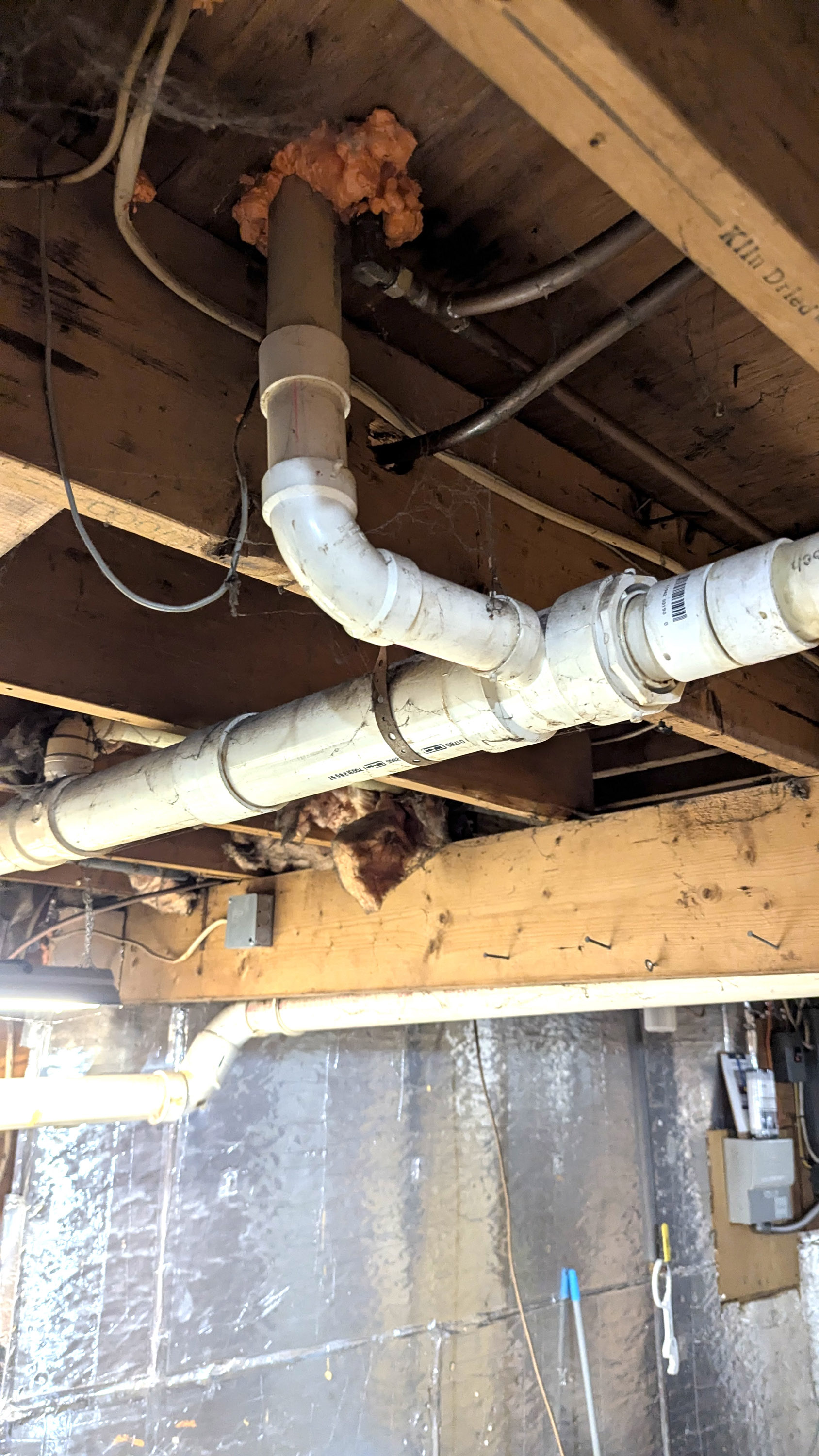
The most glaring defect was a first-floor toilet connection. The vertical drain pipe that connected to the toilet flange connected to a 90-degree fitting. This drain pipe was now horizontal and connected to the main 4-inch drain pipe with a tee fitting. The tee fitting was lying on its side.
A tee fitting looks just like a capital letter T. These are approved fittings and often called sanitary tees. A tee fitting that handles liquid waste should always be installed in a vertical fashion. The wastewater enters the side of the tee and heads down just like water flowing over a waterfall. The outlet at the top is where the vent leaves the tee.
You should always mimic Mother Nature when installing plumbing drain lines. Think about how streams connect to rivers. The stream almost always connects to the larger river at a slight angle. It’s very unnatural for a stream to connect to a river at a 90-degree angle. You want the water flowing from the stream to merge into the river much like you merge your car onto a freeway.
The fitting that should have been used is called a wye. The toilet wastewater would have been aimed to flow towards the septic system. The use of a tee on its side causes the wastewater to crash into the main drain pipe. A significant amount of the kinetic energy of the moving water is lost at this intersection.
You want as much energy to remain in the flowing water as possible to help get the solid waste to the sewer or septic tank. Let’s imagine you have frequent clogs in your main drain. The problem could be one of these rogue tee fittings in your own home coupled with a low-flow toilet that only discharges 1.6 gallons of water per flush.
This toilet drain pipe was not vented. All plumbing fixtures need vents to prevent siphonage that causes sewer gas and vermin to enter a home.
The purpose of a vent is to replace the air that is forced down the drain pipe by moving water. Many people feel vent pipes in plumbing systems are like factory smokestacks that exhaust smoke and gases. The opposite is true for plumbing pipes. The primary function of the vent pipe up on your roof is to allow air into your plumbing system.
My attention was then directed to the water heater. I observed two major flaws. Someone had installed shutoff valves on both the incoming cold water and the outgoing hot water. This is a serious safety hazard. You never want a shutoff valve on the hot water line leaving the tank. Should the pressure-relief valve on the heater fail, you want the superheated water to relieve itself out of one or more faucets in the house. A shutoff valve in the closed position can transform your water heater into a bomb.
The water heater wasn’t equipped with an expansion tank. These are inexpensive must-have accessories. You undoubtedly recall from your high school physics class that water expands when heated. This handy tank provides a safe place for the extra water to hang out until such time as the water in the plumbing lines cools down once you stop using hot water.
I also noticed the water supply lines in this house were undersized. Just about every hot and cold water line was 1/2-inch copper. The system only had 45 pounds per square inch of pressure. I tested the water flow in the second-floor bathroom, and it was pathetic. This low flow was due to the undersized water lines.
Keep in mind that if you plan to have a luxury shower in your home, or next home, you might have to run a 1-inch diameter water line to that shower.
I’m available to answer any questions you have about your plumbing system. I might be able to help you install piping correctly or diagnose a pesky problem. Just use this link to set up a phone call: https://go.askthebuilder.com/coaching
Subscribe to Tim’s FREE newsletter at AsktheBuilder.com. Tim offers phone coaching calls if you get stuck during a DIY job. Go here: go.askthebuilder.com/coaching
©2026 Tim Carter. Distributed by Tribune Content Agency, LLC.


























Comments