Sound Advice: Accounting for differing sound quality with music
Published in Tech Advice
Q. I have a very economical setup for streaming music. It uses a WiiM Ultra Streamer and 100-watt WiiM amplifier, playing over Klipsch 600M bookshelf speakers with a 10-inch Klipsch subwoofer. I’m 70, so most of what I listen to is from my era, namely '60s/'70s rock and a lot of dead vocalists like Frank Sinatra. I always stream at the highest bit rate available and I’m generally VERY happy with the sound I get from those Klipsch 600M speakers. But recently, one of my kids played a Billie Eilish album on my setup and I was absolutely blown away. The music was so very big and powerful that I thought I was listening to a much higher quality, more expensive system.
To what would you attribute this sonic dichotomy? Logic tells me that “old” music was engineered for “old,” i.e., “big” stereo systems with large speakers. I’m surmising that technological advancements account for the significant difference in sound when modern music is played on modern equipment. Your thoughts?
—J.C., Irwin, Pennsylvania
A. What you are experiencing with newer music is improvements in microphones and recorders, combined with more advanced mixing and production techniques, all yielding a superior quality recording. Vintage recordings were not engineered for less capable or physically larger systems. They are just the best recordings they could produce at the time. In fact, some of the old vinyl is really fantastic if you have a turntable capable of extracting the sound quality from it. I have a Decca release of the "Spartacus" soundtrack on vinyl that is almost 70 years old, and it sounds positively luscious. Dynamic range from digital recordings and sources is much greater, which may account for some of the "big" and "powerful" sound you are experiencing with new, digitally recorded content.
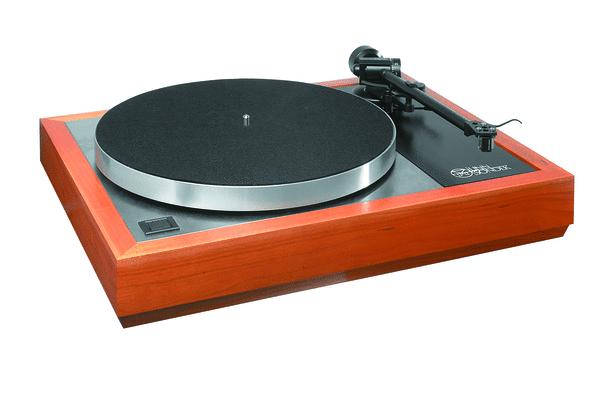
You may be surprised to learn that ultimate sound quality hasn't actually improved much in the past 50 years. If you get a pair of exotic 1970s speakers like the original Ohm A Walsh speakers or Quad electrostatics, drive them with the very best electronics of the time and play vinyl with a fully kitted-out 1970s-vintage Linn Sondek LP12 turntable, the beautiful, musical sound would be about as good as anything you can get today, even at the highest end. That 1970s system would approach $100,000 in 2026 money, and in fact you can still buy brand-new, improved versions of those same speakers and turntable. HHR Exotic Speakers sells a modern version of the Ohm A in the $30,000-$40,000/pair range, and a new Linn Sondek LP12 turntable in top Klimax trim starts at $45,970. The true technological advancement is that really high-quality sound is much more attainable and affordable than it was in the past. Modestly priced stereos of yesteryear did not sound very good. Today they can sound phenomenal if you choose your equipment carefully, as you did.
You have also discovered a key principle of sound reproduction. If it's not on the recording or you don't retrieve it from the recording, it can't be reproduced upstream afterwards. Making a meaningful improvement in source (player and recording) quality is one of the best things you can do for your system. This is why having an excellent turntable is so important when playing vinyl. You want to retrieve as much information as possible from the groove, and the Linn LP12 turntable discussed earlier was instrumental in bringing this axiom to light. You mentioned your system sounded like a much higher quality, more expensive system with the better recording. What you experienced is what a big difference improving your source makes, and what your system is actually capable of!
———
©2025 Tribune Content Agency, LLC





Comments