The science of zoomies
Published in Cats & Dogs News
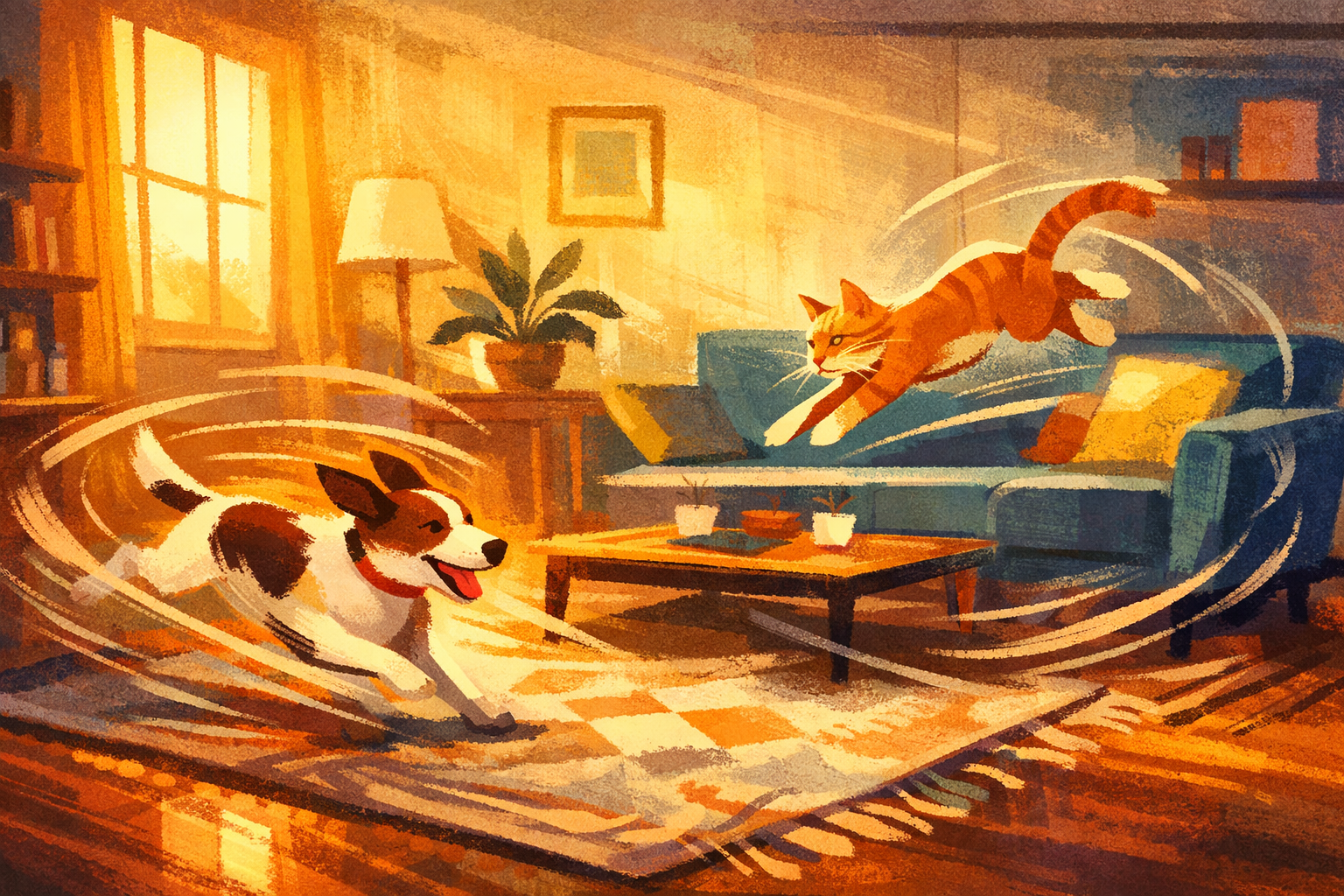
If you’ve ever watched a dog tear through the house like it’s possessed, or a cat ricochet off furniture as if chased by invisible bees, you’ve witnessed a phenomenon pet owners know well: the zoomies. The technical term is FRAPs — Frenetic Random Activity Periods — but that clinical label barely captures the joy, chaos, and mystery of the moment.
Zoomies are common, harmless, and oddly universal across species. They look spontaneous, but science suggests they are anything but random.
What zoomies actually are
Zoomies are short bursts of intense physical activity, usually lasting seconds to a few minutes. Animals may sprint, leap, spin, skid, or vocalize, often repeating the same path in loops. Dogs frequently do them outdoors, while cats prefer tight indoor circuits that include furniture, walls, and unsuspecting humans.
Biologically, zoomies function as a rapid discharge of accumulated energy. When physical or emotional arousal builds — excitement, relief, anticipation, mild stress — the nervous system sometimes resolves it through motion. The result looks chaotic, but it is actually self-regulating. After a zoomie episode, most animals settle into a noticeably calmer state.
Why they happen after baths, naps, or meals
Many zoomie episodes appear at predictable transition points. After a bath, animals experience a combination of relief and sensory overload. Their skin and fur feel unfamiliar, their scent has changed, and body temperature may shift slightly. A burst of movement helps recalibrate those sensations.
After sleep, the brain transitions abruptly from rest to alertness. Muscles that were relaxed must suddenly engage. Zooming helps synchronize body and mind.
Meals and bathroom breaks trigger small hormonal rewards. Dopamine and endorphins rise briefly, creating a sense of well-being that sometimes spills over into physical exuberance.
The role of the nervous system
Zoomies are governed by the sympathetic nervous system, the same system involved in the fight-or-flight response. In this case, however, there is no threat. Instead, excess activation needs a release.
Mammals evolved to alternate between long periods of rest and short bursts of intense activity. Domestic pets still carry this wiring, even when their daily lives involve climate-controlled rooms and predictable routines. When stimulation accumulates without release — mental excitement, anticipation, delayed play — the nervous system looks for an outlet.
That outlet is motion.
Importantly, animals experiencing zoomies are not dissociating or panicking. Research into mammalian brain activity shows heightened motor cortex engagement paired with markers associated with positive emotion. In short, the brain is energized, not overwhelmed.
Why puppies and kittens zoom more
Young animals experience zoomies more frequently because their nervous systems are still calibrating. They are learning how much stimulation is tolerable and how to regulate arousal.
Puppies and kittens also sleep deeply and wake suddenly, creating sharp transitions between rest and activity. Add rapidly growing muscles and immature impulse control, and zoomies become nearly inevitable.
As animals age, zoomies tend to decrease in frequency but not in meaning. Adult pets still experience them, just with greater bodily awareness and shorter recovery times.
Zoomies vs. stress behavior
Zoomies are sometimes mistaken for anxiety or agitation, but the distinction lies in how the behavior resolves.
Zoomies appear suddenly, peak quickly, and end on their own. Stress behaviors build gradually, persist, and often do not resolve without intervention. An animal that zooms and then relaxes is regulating itself. An animal that cannot settle afterward may be experiencing anxiety rather than exuberance.
Context matters. Familiar environments, playful movement, and rapid recovery all point toward normal zoomies rather than distress.
Do zoomies mean my pet needs more exercise?
Not necessarily. Even well-exercised pets experience zoomies. Mental stimulation, emotional excitement, and changes in routine all contribute.
That said, frequent, intense zoomies paired with destructive behavior can signal unmet needs. Increasing structured play, enrichment activities, or training games can help smooth energy peaks. The goal is not to eliminate zoomies, but to keep them occasional and joyful rather than overwhelming.
Why humans love watching zoomies
There is a reason people laugh when pets zoom. Rapid, playful movement activates mirror neurons in the human brain, producing a small surge of dopamine. Watching zoomies is contagious in the same way laughter or play is contagious.
From an evolutionary perspective, shared excitement strengthens social bonds. When a pet zooms and a human smiles, both nervous systems briefly align.
When to let them run
Most zoomies should be allowed to run their course. Interrupting them can confuse or frustrate an animal mid-release. The main exceptions involve safety — slippery floors, stairs, fragile surroundings, or situations where a large dog could accidentally knock someone over.
In those cases, calmly redirecting space or offering a familiar cue is more effective than attempting to stop movement outright.
What zoomies tell us about pets
Zoomies remind us that pets are not passive companions. They are dynamic nervous systems responding to the world in real time. They feel relief, joy, anticipation, and release — and sometimes the only honest response is to run very, very fast.
In a human world that prizes calm and control, zoomies are a reminder that joy can be inefficient, noisy, and brief. And that is part of what makes it real.
========
This article was written, in part, utilizing AI tools.








Comments