Why Going Barefoot Makes Sense, in Fashion and in Health
Published in Fashion Daily News
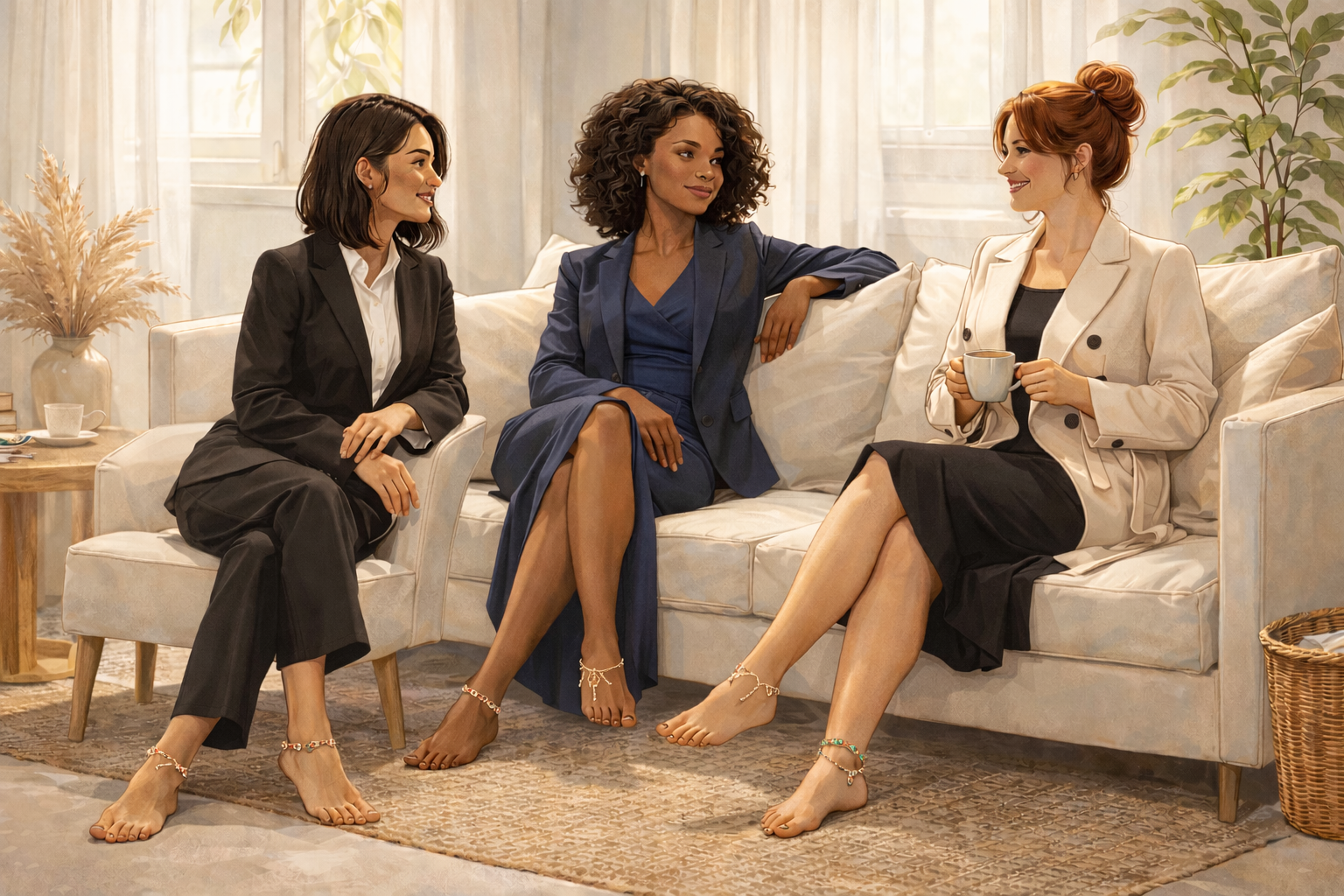
In fashion, footwear is often treated as a requirement rather than a choice. Shoes are assumed to complete an outfit, define its purpose, and anchor it in a particular social context. Yet across fashion editorials, lifestyle photography, and even everyday dress, barefoot styling continues to appear — not as rebellion, but as a practical and aesthetic decision.
Beyond style, there is also a growing body of evidence suggesting that spending time barefoot, when appropriate, can benefit foot health, posture, and movement. Together, these two perspectives — fashion and physiology — help explain why barefoot living remains appealing long after trends come and go.
Barefoot as a Fashion Choice
From a visual standpoint, going barefoot simplifies an outfit. Shoes are among the most information-heavy elements in clothing. They signal status, function, season, and intention. Removing them strips the look down to fabric, proportion, and posture.
In editorial photography, this effect is deliberate. Bare feet quiet the image. They reduce visual noise and prevent the eye from exiting the frame through footwear designed for motion or display. The viewer’s attention remains on the garment and the person wearing it.
Designers and stylists often rely on this technique when showcasing natural fibers, layered silhouettes, or tailoring that emphasizes movement rather than structure. Linen, wool, silk, and cotton read differently when paired with bare feet. The clothing appears lived-in rather than staged.
Barefoot styling also blurs the line between formal and informal. A tailored jacket or structured dress worn without shoes becomes less about occasion and more about presence. The look reads as intentional rather than unfinished.
The Role of Context
Barefoot fashion does not exist in isolation. It appears most frequently in environments where stillness, comfort, or intimacy are central to the image. Interior spaces, resort settings, and portrait-style editorials all provide contexts where footwear is unnecessary.
This is not accidental. Fashion imagery often reflects how people actually inhabit spaces. Indoors, shoes are commonly removed. Capturing that reality adds credibility to the image. The subject appears grounded rather than performative.
In this way, barefoot styling aligns with broader shifts toward authenticity in fashion media. Viewers increasingly respond to images that feel plausible and relatable rather than aspirational in a narrow sense.
Foot Health and Natural Movement
Outside fashion, health professionals have long noted that modern footwear alters how the body moves. Cushioned soles, elevated heels, and narrow toe boxes restrict natural foot motion and reduce sensory feedback from the ground.
When barefoot, the foot is free to flex, spread, and respond to surface changes. This engagement strengthens intrinsic foot muscles that often weaken when shoes do all the work. Over time, stronger foot muscles contribute to better balance and stability.
Research in biomechanics suggests that barefoot walking can encourage a more natural gait. Without thick soles absorbing impact, many people adjust their stride instinctively, reducing heel striking and distributing force more evenly.
Posture and Alignment
The foot is the foundation of posture. When footwear alters foot position, the effects travel upward through the ankles, knees, hips, and spine. Elevated heels, even modest ones, shift weight forward and can strain joints over time.
Being barefoot restores the body’s natural alignment. The heel and forefoot remain level, allowing the pelvis and spine to settle into a more neutral position. For some individuals, this reduces lower back discomfort and joint stress.
Physical therapists often recommend barefoot or minimalist movement exercises as part of rehabilitation for foot and ankle issues. These practices emphasize controlled, intentional movement rather than impact or speed.
Sensory Awareness and Balance
Bare feet increase sensory input. Nerve endings in the soles of the feet provide constant feedback about texture, temperature, and pressure. This information helps the brain make micro-adjustments that maintain balance.
As people age, balance becomes increasingly important. Studies have shown that barefoot or minimally shod activities can improve proprioception, the body’s awareness of its position in space. Improved proprioception reduces the risk of falls.
This sensory connection is largely absent in heavily cushioned shoes, where thick soles mute feedback from the ground.
When Barefoot Makes Sense
Health professionals are clear that barefoot living is not appropriate in every situation. Hard urban surfaces, extreme temperatures, and environments with sharp debris present risks. In those cases, protective footwear is necessary.
However, many daily activities take place in controlled environments where those risks are minimal. Indoors, on clean surfaces, or in natural settings like grass and sand, barefoot movement is both safe and beneficial for most people.
The key is moderation and awareness. Just as muscles need time to adapt to new exercise routines, feet need gradual exposure to barefoot movement. Transitioning slowly reduces the risk of strain or injury.
The Overlap of Health and Style
Fashion often mirrors shifts in how people think about their bodies. As comfort and well-being gain prominence, styling choices follow. Barefoot imagery fits naturally into this landscape.
Clothing designed for ease, flexibility, and layering pairs well with the absence of shoes. The overall effect communicates comfort without sacrificing polish. It suggests confidence rather than neglect.
This overlap helps explain why barefoot styling feels contemporary rather than nostalgic. It aligns with broader conversations about sustainability, mindfulness, and intentional living.
A Practical Conclusion
Choosing to go barefoot is neither radical nor universal. It is a situational decision informed by environment, comfort, and purpose. In fashion, it offers visual clarity and authenticity. In health, it supports natural movement and sensory awareness.
Taken together, these factors explain why barefoot living continues to appeal across disciplines. It is not a trend driven by shock or novelty. It is a return to a default state that modern life often obscures.
When done thoughtfully, going barefoot is both stylish and sensible — a rare case where aesthetic choice and physical well-being align.
========
This article was written, in part, utilizing AI tools.






Comments