LA residents complained about dangerous coyote months before it attacked a toddler, emails show
Published in News & Features
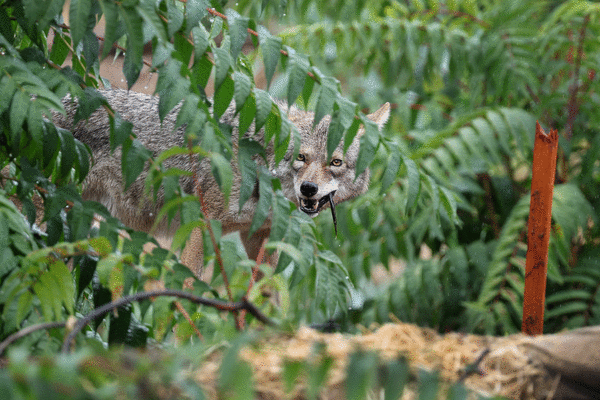
LOS ANGELES — Wildlife officials euthanized a coyote in Atwater Village after a reported attack on a 16-month-old child and months of complaints from residents that the animal had become dangerously comfortable around people.
California Department of Fish and Wildlife officers responded to the 3300 block of Glenhurst Avenue on Friday after receiving reports that a child was injured in an incident involving a coyote, the department said in a statement.
The child was treated at a hospital and released. That same evening, officers found a coyote in the area where the child was bitten, then trapped and euthanized it.
Officials took DNA samples from the child and the coyote to determine whether the animal that was euthanized was the same one that bit the child.
People in the neighborhood said the coyote believed involved in the attack had been a nuisance since at least January, when they said a man in the neighborhood started feeding it. The animal started encroaching on people’s houses day and night.
Dan Bree, who lives about two blocks from where the coyote attacked the child, said he and other neighbors had been trying to get the attention of city animal services and state wildlife officials since at least June. Neither agency was able to take action, he said, because they didn’t have documented evidence that someone was feeding the coyote or that it had harmed anyone.
The city animal services department echoed that statement, saying officers were sent to the neighborhood but found no proof of any violations of city law.
Recently, Bree was trying to pool money to pay for a coyote trap. He ran into some snags when nobody wanted to have the trap set in their yard, Bree said.
News of the child being bitten elicited little surprise from residents, he said.
“We were all, like, ‘well, there it is,’” Bree said.
Another concerned resident, Richard Dean, provided emails in which he all but begged the city to do something about the animal.
“I have to insist that you take actual action against these coyotes in Atwater Village. I am not asking. I am telling you,” Dean wrote June 19 to a Los Angeles Animal Services officer. “If you continue this course of inaction someone is going to get seriously hurt.”
Los Angeles Animal Services said in a statement that the agency was “disturbed and saddened” by the incident.
“Our thoughts are with the child and family, and we recognize the serious concerns expressed by residents regarding coyote activity in their neighborhood,” spokesperson Agnes Sibal-von Debschitz wrote in an email.
On May 20, an animal control officer went to the house of the person reportedly feeding the coyote, she wrote, but the person denied doing so and let the officer examine the property. The officer didn’t see anything warranting a violation, according to Sibal-von Debschitz. More complaints came in in June, and the agency contacted the people who filed them and gave them information about coyote behavior and consulted with the state about residents’ concerns.
“The Department did not disregard these complaints,” Sibal-von Debschitz wrote. “Our personnel responded to the location, contacted the individual identified in the complaints, followed up with reporting parties, and coordinated with the state agency responsible for wildlife management.”
Although it is illegal to feed non-domesticated mammalian predators, such as coyotes, establishing that this crime has occurred required evidence that animal services did not find, the agency said.
Joe Marconi said he lives across the street from a man who admitted earlier this year to feeding the coyote. Marconi said he asked the man to stop, pointing out that there are many families with pets and small children in the neighborhood, but he said the man refused. On multiple occasions, Marconi said, he had to run out into the front yard when his 7-year-old daughter walked out on her own and the coyote was there. He said he’d had to chase the coyote away after it ran his cat up a tree. Once, it came to his screen door and scratched at it, like a dog, he said.
Several other neighbors asked the man in vain to stop, and then they started reporting the coyote to the city and the state, Marconi said.
“The general kind of response was that there was nothing that could be done,” Marconi said.
Rebecca Dmytryk, chief executive of Humane Wildlife Control, a nuisance control company, said she believed the coyote was almost certainly reared by humans, given how comfortable it appeared around people. Dmytryk was one of multiple people asking the city and the state to take action but to no avail, she said.
“This situation required intervention long before a child was injured,” Dmytryk wrote in an email. “Now a child has been hurt, and a coyote is dead.”
Dmytryk said she used the Fish and Wildlife tip line to file a complaint about the coyote on July 28, asking them to visit the house of the man who was supposedly feeding the coyote and talk to him.
“Single coyote reported loitering and hanging out in the person’s backyard sleeping on top of vehicle,” Dmytryk’s complaint read, according to a copy she shared with The Times. “Coyote reportedly following people as they will do when they are human conditioned, associating humans with handouts.”
Fish and Wildlife acknowledged getting that and other tips about somebody illegally feeding coyotes in the area, spokesperson Cort Klopping said in an email. Wildlife officers have followed up on those tips and are currently investigating allegations of a resident intentionally feeding coyotes, he said.
Although officers went to the scene in response to the tips, the agency wouldn’t try to capture the coyote unless an incident such as the one involving the animal biting the child had already occurred, Klopping said.
If a person encounters a coyote and the animal approaches them, the Fish and Wildlife Department suggests keeping a safe distance and backing away slowly, keeping children and pets close, making loud noise, trying to appear bigger and letting the animal leave the area on its own. If a coyote attacks, the department recommends fighting back and then calling animal control or 911.
Incidents in which coyotes attack humans are rare but not unheard of.
In February, a mother and her 3-year-old child ran back into their Pasadena home as a coyote approached the boy. Last year, a coyote bit a 6-year-old child at a baseball field. In 2022, a child was attacked on a front lawn in Woodland Hills.
The first confirmed fatal coyote attack in California occurred in 1981, when 3-year-old Kelly Keen was mauled in front of her home.
©2026 Los Angeles Times. Visit at latimes.com. Distributed by Tribune Content Agency, LLC.






Comments